
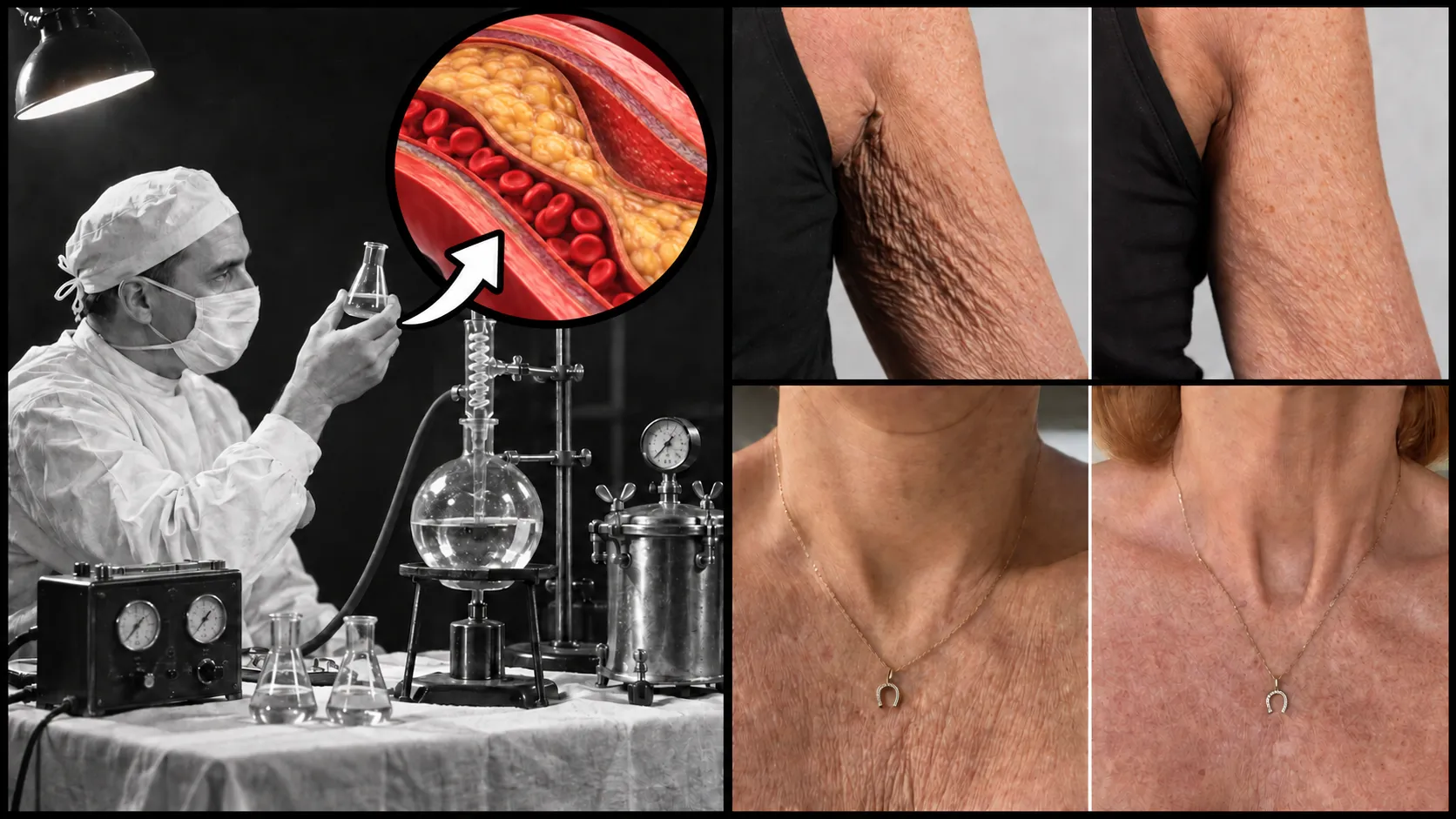


For three years, Susan Whitaker's arms were so crepey she wouldn't leave the house in short sleeves.
Last month, at her daughter's college graduation party, she wore a sleeveless dress.
Not because the day was hot. Not because she'd run out of cardigans.
But because, for the first time in a long time, she wasn't trying to hide her neck or arms.
"At first I thought it was Susan's younger sister," said her friend Diane, "I asked what on earth she'd done."
Susan laughed and shook her head.
"Nope it's me, silly! No surgery. No procedures. Just a little something new I do every morning. Takes about 2 minutes."
Yes, I know how that sounds.
I've been a skincare writer for over 15 years, and my job is to check out stories like Susan's.
Most of them fall apart within an afternoon...
But Susan's didn't.
So grab a cup of coffee and get comfortable.
Because the trail behind Susan's little morning ritual leads somewhere I never expected...
To a biochemist's San Francisco lab in 1973, and a discovery that's been sitting in published research for fifty years.
Women who've tried Susan's routine have started calling it the "2-Minute Signal Reset."
I'll tell you exactly what it is in just a moment...
But if the skin on your arms, neck, chest, or hands has started looking thin, crinkled, or crepey... you NEED to read this!
Because Susan spent three years and thousands of dollars to learn what you're about to discover in the next 6 minutes.
Here's her story, exactly as she told it to me...
At 56, Susan's Neck & Arms Were "Crepe Paper." Ninety Days
Later, She Couldn't Stop Showing Them Off

I met Susan at a coffee shop in Sarasota on a Tuesday afternoon. She ordered an iced tea, sat down across from me. And I'll admit, I did a double take.
Susan is 56. But the skin on her arms, her hands, her neck didn't match. It was smooth. Firm-looking. The kind of skin you'd expect on a woman years younger.
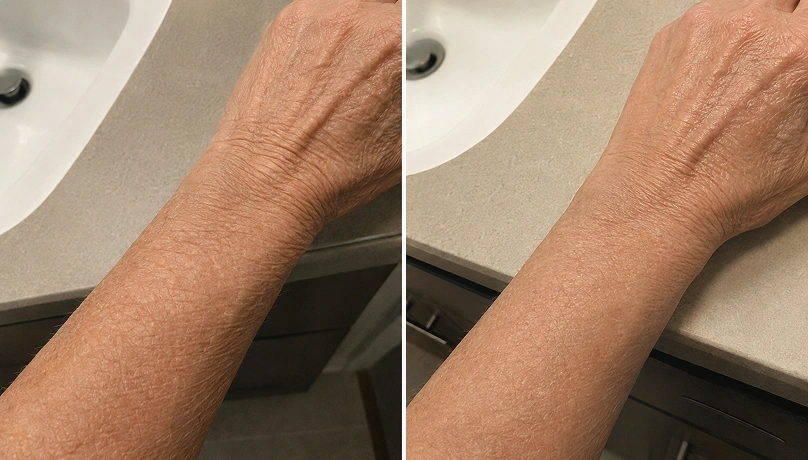
"Three months ago, I looked completely different," Susan told me, pulling out her phone. "At just 56, the paper-thin appearance of my skin made my arms, neck, and décolletage look decades older than my actual age."
The before photos showed exactly what she meant.
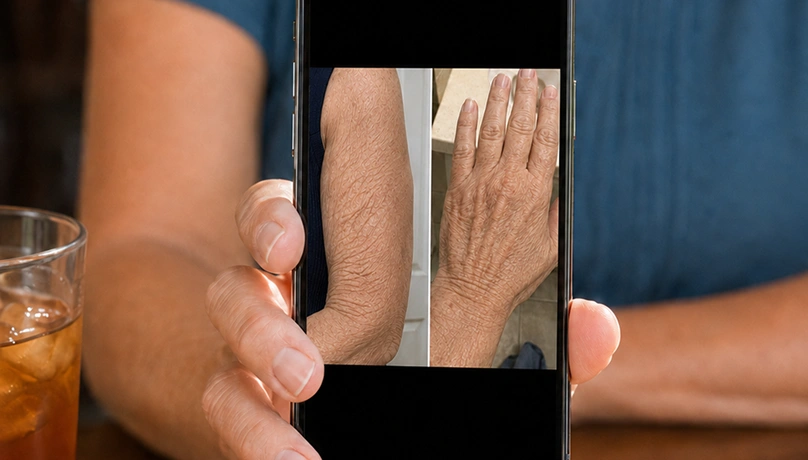
"I'd tried everything," she said. "From expensive department-store creams to pricing out painful and risky procedures — anything that promised to bring back the firm, smooth skin I once had."
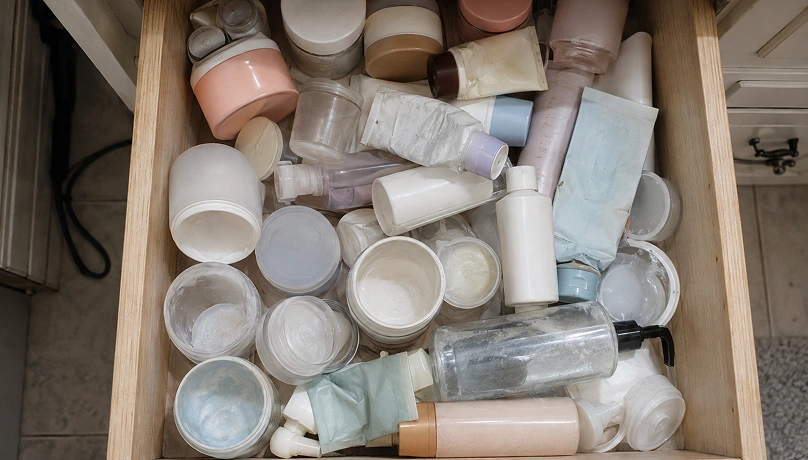
"I stopped wearing sleeveless tops and swimsuits because the skin on my arms was so thin and crepey," she admitted.
"I felt like I had to camouflage my body with clothing, watching my youthful skin disappear despite doing everything right."
"What changed?" I asked.
Susan smiled. "I finally found out what a biochemist discovered back in 1973."
In 1973, a Biochemist Pulled Something Strange Out of Human Blood.
This Discovery Explains Everything About Your Crepey Arms.
Dr. Loren Pickart wasn't your typical scientist.

While his colleagues chased cancer cures in the late 1960s, the Minnesota-born researcher chose to study human aging instead. As he later joked in an interview, "that way I would always have a job."
He earned his PhD in biochemistry at the University of California, San Francisco. He published research on one molecule for more than five decades.
He founded a biotech company around his discovery and took it public on the NASDAQ.
And before he passed away in 2023 at age 85, the peptide he found had quietly become a staple in dermatologists' offices, used around professional skin procedures, and a fixture in hair clinics for decades.
But it all started with something strange he kept noticing in his lab at UCSF.

Blood from young donors behaved differently than blood from older donors.
When tissue from older donors was exposed to plasma from young donors, the aging cells changed.
They began producing proteins more typical of young, healthy tissue. Something in young blood was carrying an instruction. An order to repair.
His answer to that mystery became his 1973 doctoral thesis, titled "A TriPeptide from Human Serum."
He had isolated one of the smallest signaling molecules ever found in human blood: just three amino acids bound to a single copper ion.
Scientists call it GHK-Cu. On an ingredient label, it's Copper Tripeptide-1.
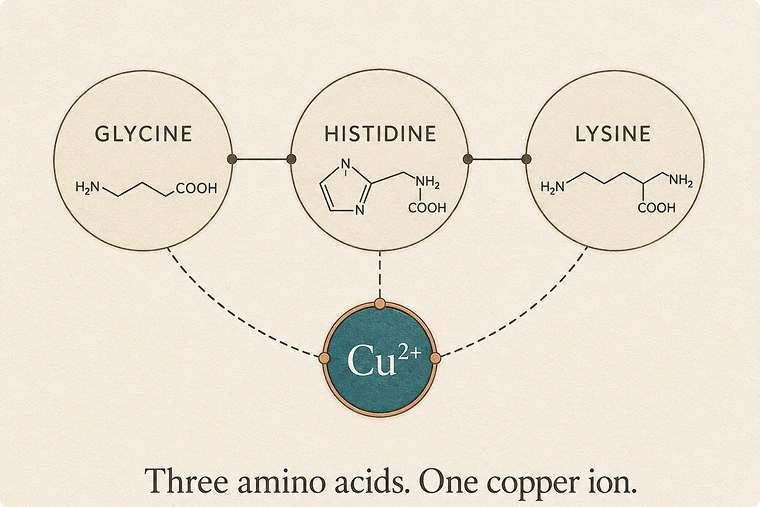
Copper Tripeptide-1 — three amino acids bound to a single copper ion. One of the smallest signalling molecules ever isolated from human blood.
The #1 Reason Crepey Skin Shows Up After 50 (Hint: It's Not Aging)
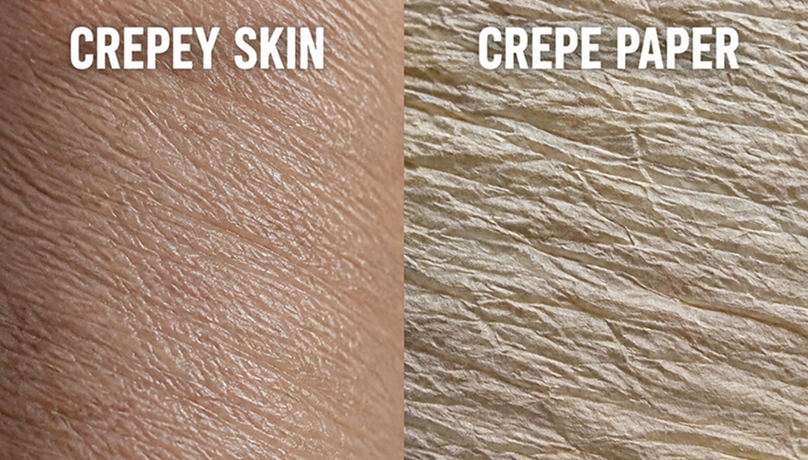
Most women think crepey skin is just aging. The research says it's not.
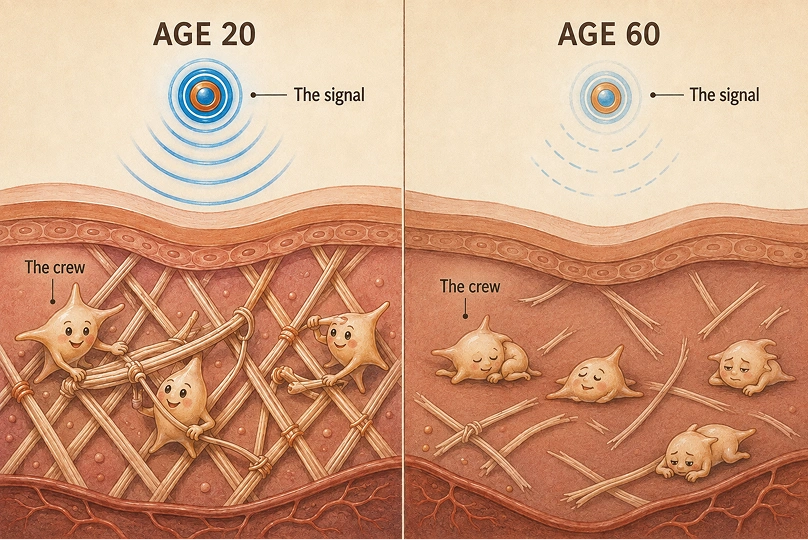
Dig through the published studies and you find something almost no one in skincare talks about: the cells responsible for your skin's firmness don't just slow down as you age. They stop getting their orders.
Here's what the research shows.
Fibroblasts are cells that live in your skin. You can think of them like the crew that builds collagen and elastin.
They're the reason skin stays thick, firm, and smooth. And they take their work orders from signaling molecules.
Chief among them: the copper peptide Dr. Pickart discovered.
In 2018, Pickart and a colleague published a paper in the International Journal of Molecular Sciences with a measurement that explains everything.
At age 20, your blood plasma carries roughly 200 nanograms per milliliter of GHK.
By age 60, it has fallen to about 80.
Your skin's repair signal, by age
GHK in blood plasma, nanograms per millilitre
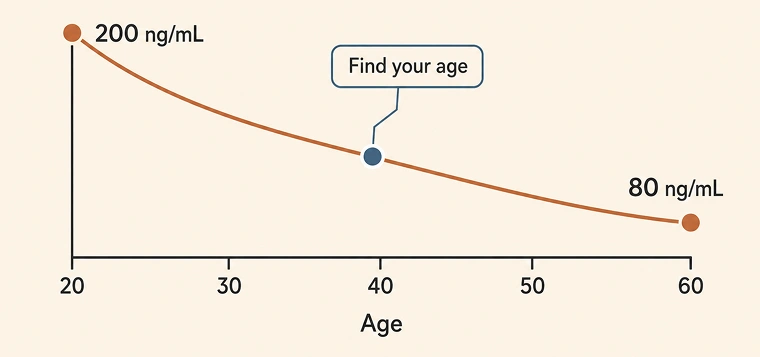

140 ng/mL
At 40, your fibroblasts are receiving roughly 30% less repair signal than they did at 20.
That's a 60 percent drop in the molecule that carries your skin's
repair instructions.
Your crew never left. The foreman handing out the work orders went
quiet.
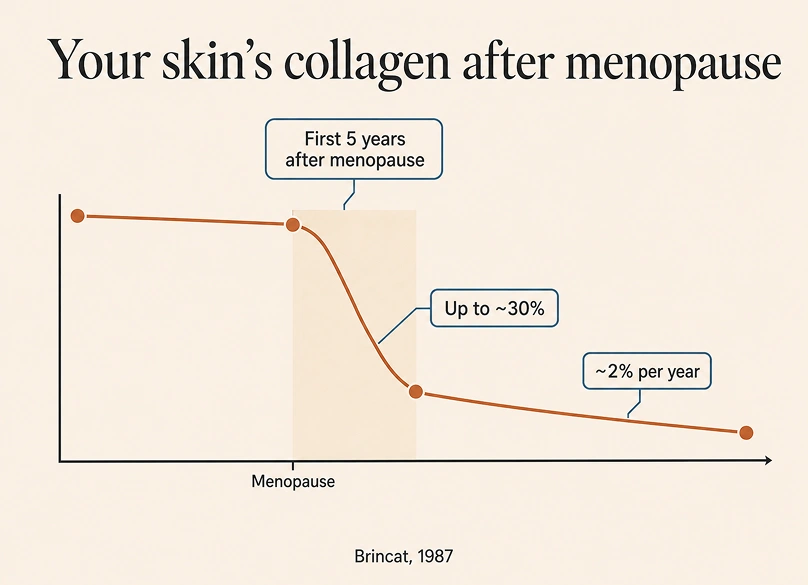
And for women, it gets worse.
Research published in the journal
Obstetrics & Gynecology
found that women lose up to about 30 percent of their skin's
collagen in the first five years after menopause.
Two documented declines, converging at the same time, on the same
skin.
It's not just one study.
Studies in
Nature New Biology, The International Journal of Molecular
Sciences, Obstetrics & Gynecology.
They all point to the same thing: the thin, crepey skin on your
arms, neck, chest, and the backs of your hands is what a fading
repair signal looks like.
So why does no one talk about the Signal Shutdown?
Because until recently, nothing addressed it. Every cream on the market fights the symptoms. The dryness, the crepiness, the thinning. But none of them address the culprit underneath: skin that stopped receiving its repair signal.
Crepey skin isn't a moisture problem. It's a signal problem.
And that's what makes Pickart's molecule so remarkable. The fibroblast crew doesn't die.
When your skin goes thin and crepey in your 50s, those cells are simply idling, waiting on instructions that stopped arriving.
Published research on GHK-Cu describes it as exactly that instruction: a signaling peptide involved in the skin's production of collagen, elastin, and the moisture-holding molecules between them.
The repair signal, in a jar's reach, for the first time.
The Most-Studied Peptide in Skincare Was Reserved for Faces Only.
Why Your Neck & Arms Were Never Invited... Until Now!

Here's the strange part. For fifty years, this molecule never made it below the chin.
Copper peptides live in facial serums. One-ounce bottles. Twenty-eight to thirty-three dollars an ounce. Try covering your neck, chest, both arms, and the backs of both hands out of a bottle like that, twice a day, and you'd go broke by summer. So nobody did. The skin that shows a woman's age first simply never got the ingredient.
That's the gap the formulators at a small American skincare company called Noor spent more than a year closing.
And they discovered the peptide was only half the equation.
Skin that's been starved of its signal for years is also starved of raw materials. Post-menopausal body skin barely makes its own oil anymore. Send in a signal with no supplies, and it's a foreman shouting at an empty lumber yard.
That's why they built what they call the Cu-29 Signal + Supply Complex™, named for copper's square on the periodic table, printed right on the jar.
"The signal and the supply work together like a foreman and his crew," is how the company puts it. "Miss one, and you're back to a cream that just sits on top."
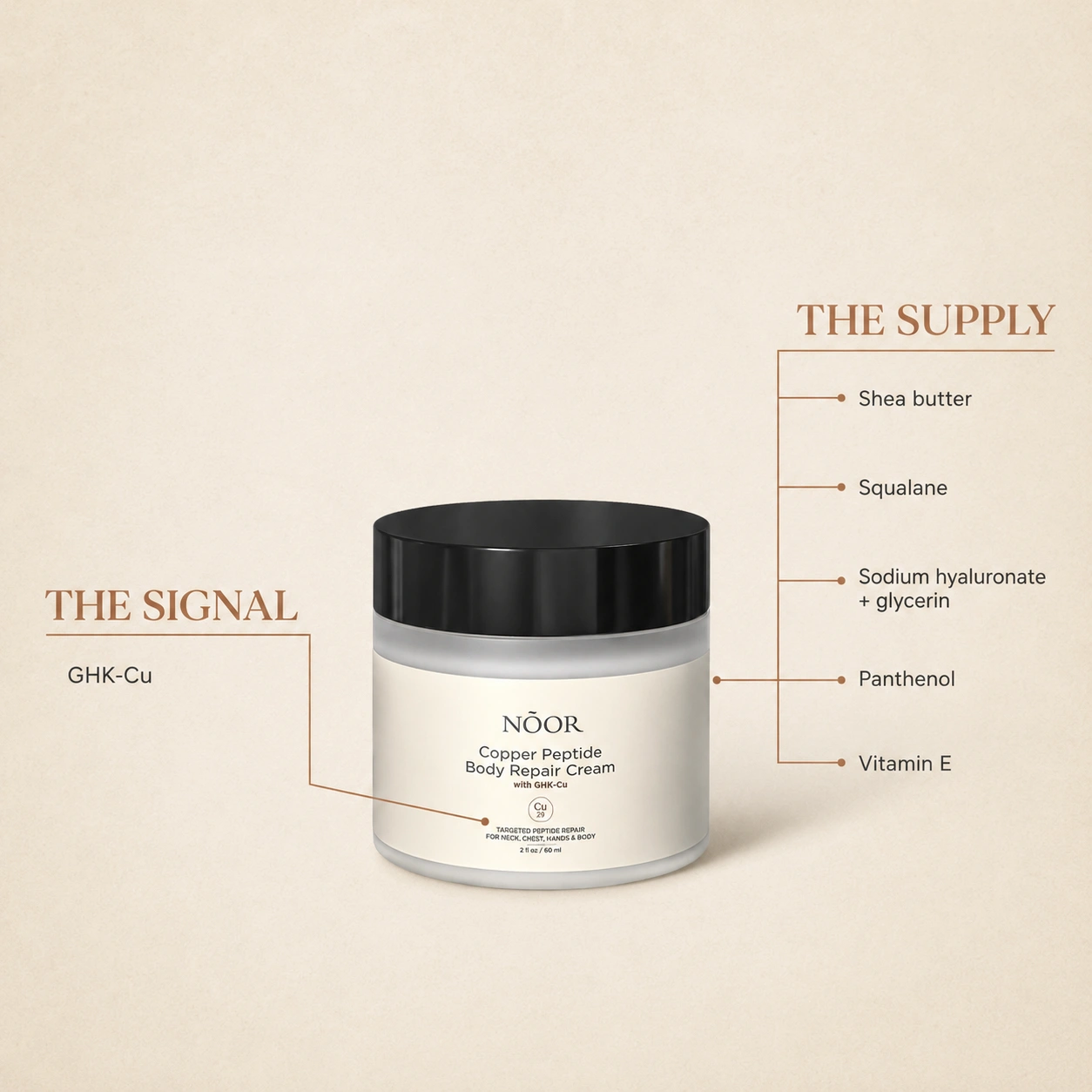
THE SIGNAL
GHK-Cu
Copper Tripeptide-1 — the instruction itself, applied directly to the zones that lost it.

The molecule Pickart isolated in 1973, on the four zones no one ever put it on.
THE SUPPLY
Six raw materials
Post-menopausal body skin barely makes its own oil. A signal with no supplies is a foreman shouting at an empty lumber yard.
Shea butter — second on the label. Barrier lipids mature skin stops making.
Squalane — mimics your skin's own oil.
Sodium hyaluronate — draws water into the surface layers.
Glycerin — holds it there, where crepiness catches the light.
Panthenol — calms.
Vitamin E — protects.
"The signal and the supply work together like a foreman and his crew," is how the company puts it. "Miss one, and you're back to a cream that just sits on top."
The result of their work is Noor's Copper Peptide Body Repair Cream.
"Do This For Two Minutes After Your Shower. Morning and Night. For 90 Days."
When Susan found Noor’s Copper Peptide Body Repair Cream that night, she ordered the full 90-day protocol. Three jars.
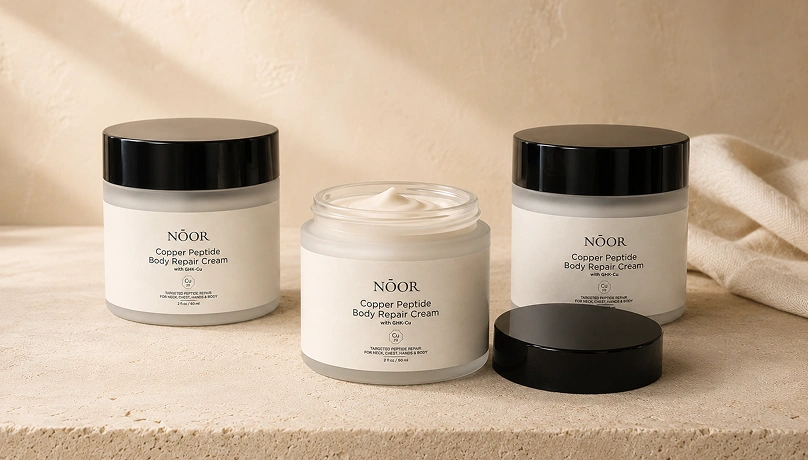
The instructions were simple: apply it every morning and every night for 90 days. Just 2 minutes. Then judge for yourself.
Susan was skeptical. After years of disappointment, who could blame her?
"I honestly didn't expect much," she admitted. "But the research made more sense than anything I'd read in years. So I figured I'd give it a shot."
Susan followed the instructions exactly.
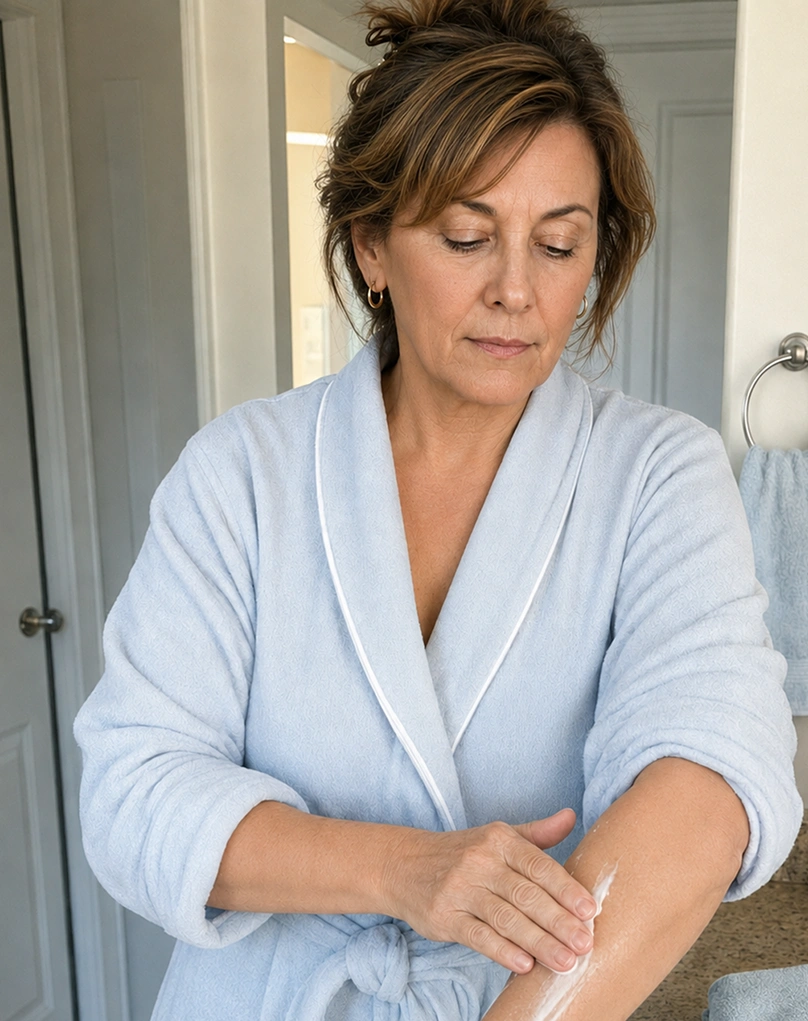
"Every morning, right after my shower, I'd apply it just like the label showed me," Susan explained. "It took maybe 2 minutes. That's it."
Week 3: "Wait... Is This Actually Working?"
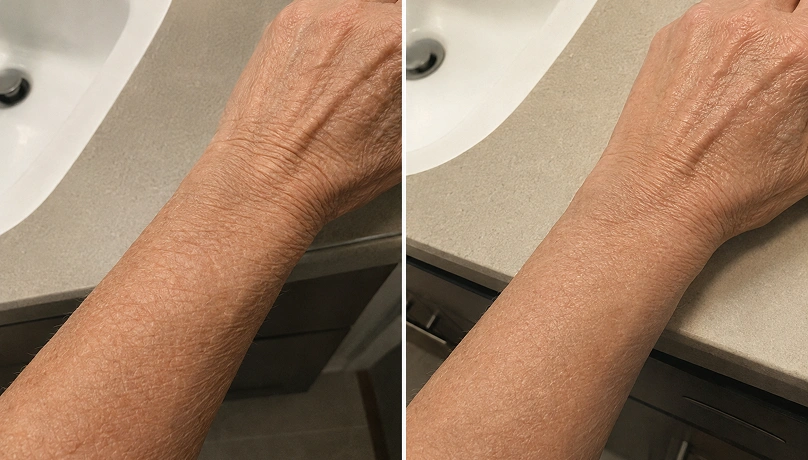
By week three, Susan started noticing changes.

Week 3
Texture starts changing
Skin on the hands and upper arms feels plumper. Less of the thin, paper-like crinkle. Arms stop feeling fragile.
Week 6
Other people notice
The point at which someone close to you asks what you're doing differently — before you've said anything.
Day 90
The sleeveless dress
Arms smoother, hands firmer and fuller, neck and chest softer and more even.
"The skin on the backs of my hands and my upper arms felt plumper," she said. "Less of that thin, crinkly, paper-like texture. And my arms didn't feel so fragile anymore."
By week six, the change was undeniable.
"My husband kept staring at me," Susan laughed. "He finally asked what I was doing differently. When I told him it was just a cream, two minutes a morning, he didn't believe me."

And by day 90, there was a sleeveless dress hanging in her closet with the tag still on, bought for her daughter's graduation. On purpose.
The crepey texture on Susan's arms looked smoother. The paper-thin skin on the backs of her hands looked firmer and fuller. Her neck and chest appeared softer, more even, more youthful.
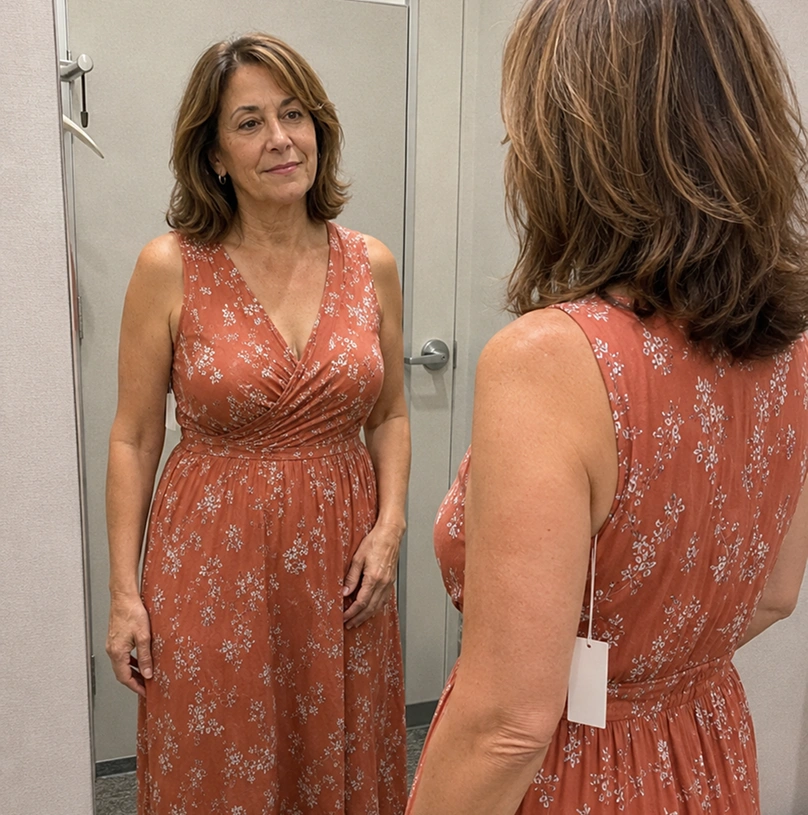
"I looked in the mirror and saw myself again," Susan said, her voice catching. "Not the woman who hid under long sleeves and skipped the pool. Me. The way I remember looking before all this started."
The Morning Habit That Replaced a Drawer Full of Lotions
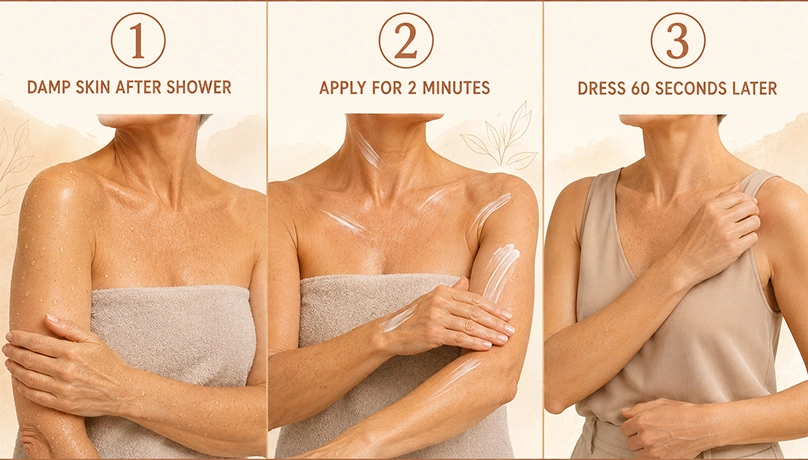
I asked Susan to show me exactly what she does every morning.
"There's no trick to it," she said. "After your shower, while your skin is still slightly damp, smooth Noor's Body Repair Cream over your arms, neck, chest, and the backs of your hands — anywhere the skin looks thin or crepey — using firm upward strokes."
She looked up. "That's it. About two minutes. Then again before bed."
"You're not layering on ten products," she added. "You're giving your skin the one thing it's actually been missing — the repair signal, along with the materials to use it."
Why Noor Copper Peptide Body Repair Cream Works When Everything Else Fails
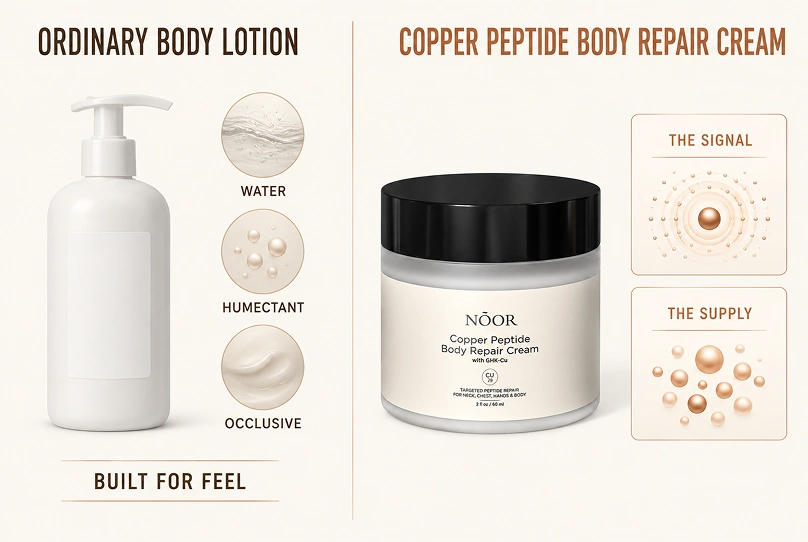
Standard anti-aging creams are useless against crepey skin. They focus on surface moisturizing, temporary plumping, quick-fix tighteners, masking the problem with silicones.
None of it touches the missing signal underneath.
Look at the difference. Most body lotions give your skin water and grease. Skin feels nice for an hour, looks a little plumper while the moisture is there, and by evening the crinkles are right back.
Noor's Copper Peptide Body Repair Cream delivers something no body lotion ever has: the signal peptide itself, with the supply to match.
And it's made for the skin that needs it.

Fragrance-free. Retinol-free. Paraben-free. No harsh chemicals, no irritants. Designed for thinning, sensitive, post-menopausal skin, because this category has burned those women before.
Noor's Copper Peptide Body Repair Cream is...

Made for thinning, sensitive, post-menopausal skin.

Fragrance-free
Retinol-free
Paraben-free
No known irritants
Susan Isn't Alone
As I researched this story, I found Susan was far from alone.


Marianne R., 57
"I was skeptical because I've tried everything, expensive and inexpensive. This cream is the real deal. My neck, chest, and hands look more changed in two months than the last five years combined. Worth every penny."

Ann T., 67
"I look so much younger! I started using this in the spring and there's such a difference in how I look. I reordered and will continue using it. I'm soon to be 68 and people notice."

Linda M., 65
"I can feel the difference in my skin. Goes on smooth, no smell, no grease. It has saved my confidence. I used to worry how I looked every time I left the house and now those insecurities are fading."
The Beauty Industry Doesn't Want You to Know This
Here's the tough question I kept coming back to: if the research goes back to 1973, why has no one told you about the Signal Shutdown?
Think of modern skincare as a bandaid for aging skin. It doesn't solve the root cause, and that's by design.
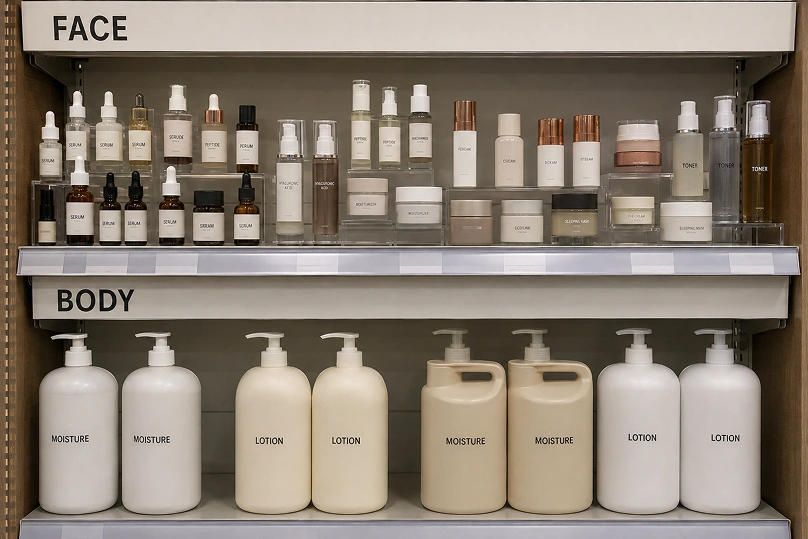
The industry puts its serious ingredients in tiny facial bottles at premium prices, and hands you "moisture" for everything below your chin. Temporary fixes, sold to women year after year, decade after decade.
In fact, in a global survey of more than 4,300 women, over half said they learned what menopause does to their skin only by living through it.
Nobody warned them. Nobody offered the zones that show age first anything more than lotion.
The truth is simpler than the industry wants it to be: they aren't in control of your skin's aging. You are.
Arm filler
Per arm. Both arms, twice.
$2,500
Face serums, stretched to four body zones
At $30/oz, twice daily · estimated
$240/mo
Department-store body creams
The drawer Susan photographed
$400+
The full 90-day protocol
Three jars · 180-day guarantee
$129.00
How to Try
Noor Copper Peptide Body Repair Cream
Yourself (And Lock In the 50% Reader Discount)
After spending days researching this story and interviewing Susan, I have to admit — I'm convinced.
The science is published. The story is consistent. And Susan's transformation, along with the others I found, speaks for itself.
Noor makes Copper Peptide Body Repair Cream available directly to consumers through its website, bypassing traditional retail channels.
No appointment, no prescription. Anyone can order it and start the 2-minute ritual tomorrow morning.

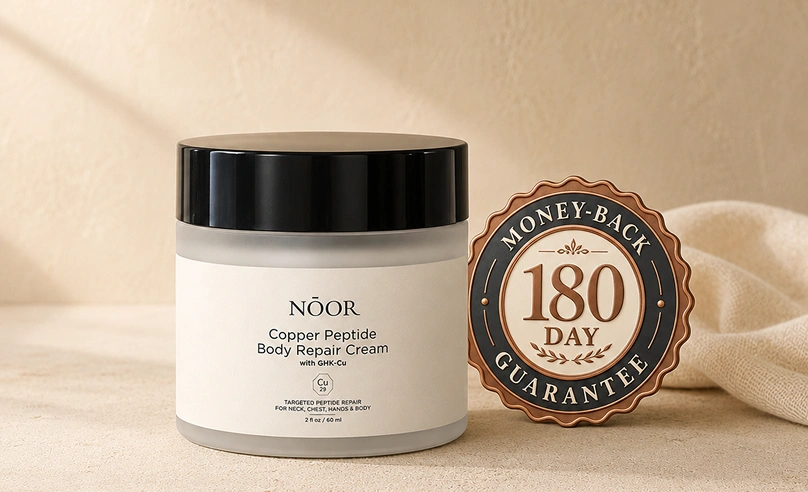
They also offer something I've rarely seen in this category: a 180-day money-back guarantee.
Use it for the full 90-day protocol. Follow the simple instructions.
If you're not amazed by the way your skin looks, send it back for a full refund. No questions asked.
You have 180 days to decide, which means you can finish the entire protocol twice over before you're out a single penny.


Full refund, no questions, no forms, no store credit
180 days is twice the 90-day protocol — finish it completely, twice over, and still return it
Keep the jar even if you refund
Susan's Life After the Transformation

Before I left, I asked Susan what she'd tell herself 90 days ago.
She thought for a moment.
"That she doesn't have to hide anymore. That she can stop camouflaging her body and just wear what she wants again."
She pulled up the photo from the graduation party — the sleeveless dress, mid-laugh, her daughter on her arm.
"This is me now," she said. "Two minutes a morning. That's nothing. But feeling like myself again? That's everything."

One last thing — from Laura
skincare writer
Before I finished this story, I asked Noor one last question — was there any way our readers at The Over-50 Skin Journal could try Noor's Copper Peptide Body Repair Cream without paying full retail?
To my surprise, they said yes.
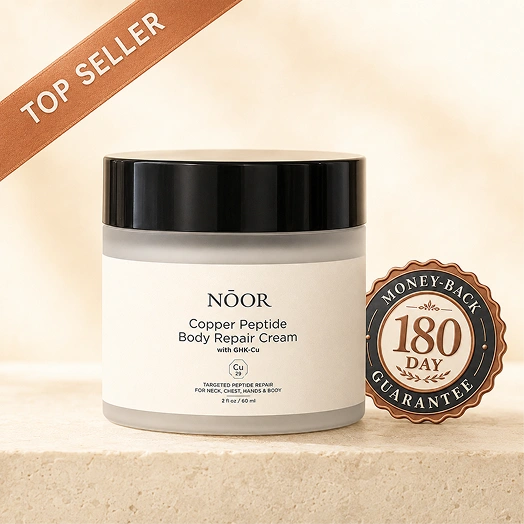
For a limited time, Noor has agreed to honor up to 50% off for readers coming directly from this article, with free shipping included, when you stock up for the full 90-day protocol.
This isn't a coupon code or a sale you'll find on their site. It's a private arrangement extended to our readers because, in their words, "your readers are exactly the women this was made for."

Laura Benton
Skincare writer and specialist who has been covering beauty and dermatology innovations for over 15 years.
50% OFF & FREE SHIPPING
Inventory is extremely limited
Click to Check Current Availability



They said I look younger now
I use this on my arms and hands every morning right after my shower. My grandkids told me I look younger last weekend. That's all the proof I need. I'll be buying this as long as Noor makes it.
Elaine W.

Verified buyer

Smoother skin on arms and neck
Didn't expect a big difference BUT… I was wrong. After a couple of weeks the skin on my arms and neck feels smoother and looks much less crepey. It works on my hands too. I'll run out faster but it's worth it!
Deborah M.
Verified buyer

My Confidence Is FINALLY Back!
After a rough couple of years I was trying everything to feel good about myself and honestly, not much was working. A friend told me about Noor's Copper Peptide Body Repair Cream and every week I continue to be amazed. I'm 55 and feel better about how I look than I did at 45.
Sharon J.
Verified buyer

Skin looks better after 8 days
On the eighth day I did a picture comparison and my skin looks so much more hydrated and vibrant. Friends tell me they can see a difference. I've found what works!
Jaanna B.
Verified buyer