References
Clinical Research
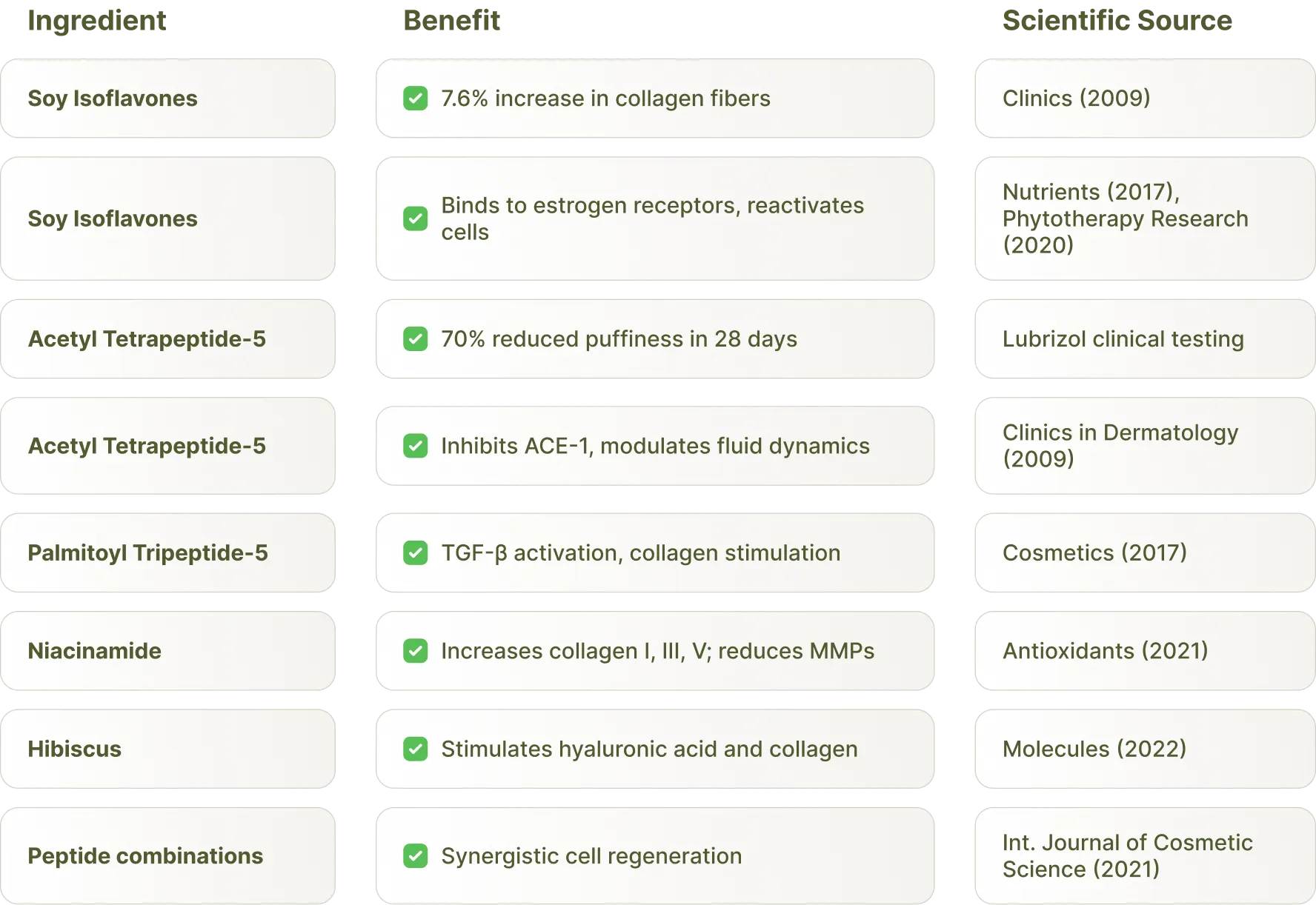
[1] Stevenson, S., & Thornton, J. (2007). Effect of
estrogens on skin aging and the potential role of SERMs.
Clinical Interventions in Aging, 2(3), 283–297.
[2] Thornton, M. J. (2013). Estrogens and aging skin.
Dermato-endocrinology, 5(2), 264–270.
[3] Irrera, N., et al. (2017). Dietary Management of
Skin Health: The Role of Genistein. Nutrients, 9(6), 622.
[4] Liu, T., et al. (2020). Recent advances in the
anti-aging effects of phytoestrogens. Phytotherapy
Research, 34(3), 435-447.
[5] Boo, Y. C. (2021). Mechanistic Basis and Clinical
Evidence for Nicotinamide. Antioxidants, 10(8), 1315.
[6] Accorsi-Neto, A., et al. (2009). Effects of
isoflavones on postmenopausal skin. Clinics, 64(6),
505-510.
[7] Schagen, S. K. (2017). Topical Peptide Treatments.
Cosmetics, 4(2), 16.
[8] Zhang, L., & Falla, T. J. (2009). Cosmeceuticals
and peptides. Clinics in Dermatology, 27(5), 485–494.
[9] Wang, D., et al. (2022). Hibiscus and Skin Aging.
Molecules, 27(18), 6076.
[10] Flagler, M. J., et al. (2021). Peptide synergy.
Int. Journal of Cosmetic Science, 43(5), 517-529.
Disclaimer
References link to peer-reviewed research on individual
ingredients. Manufacturer clinical data is noted where
applicable. Individual results may vary. This product is
not intended to diagnose, treat, cure, or prevent any
disease. These statements have not been evaluated by the
Food and Drug Administration.